
ropavieja
cook with what you already have: snap your receipt, home recipes, zero waste.
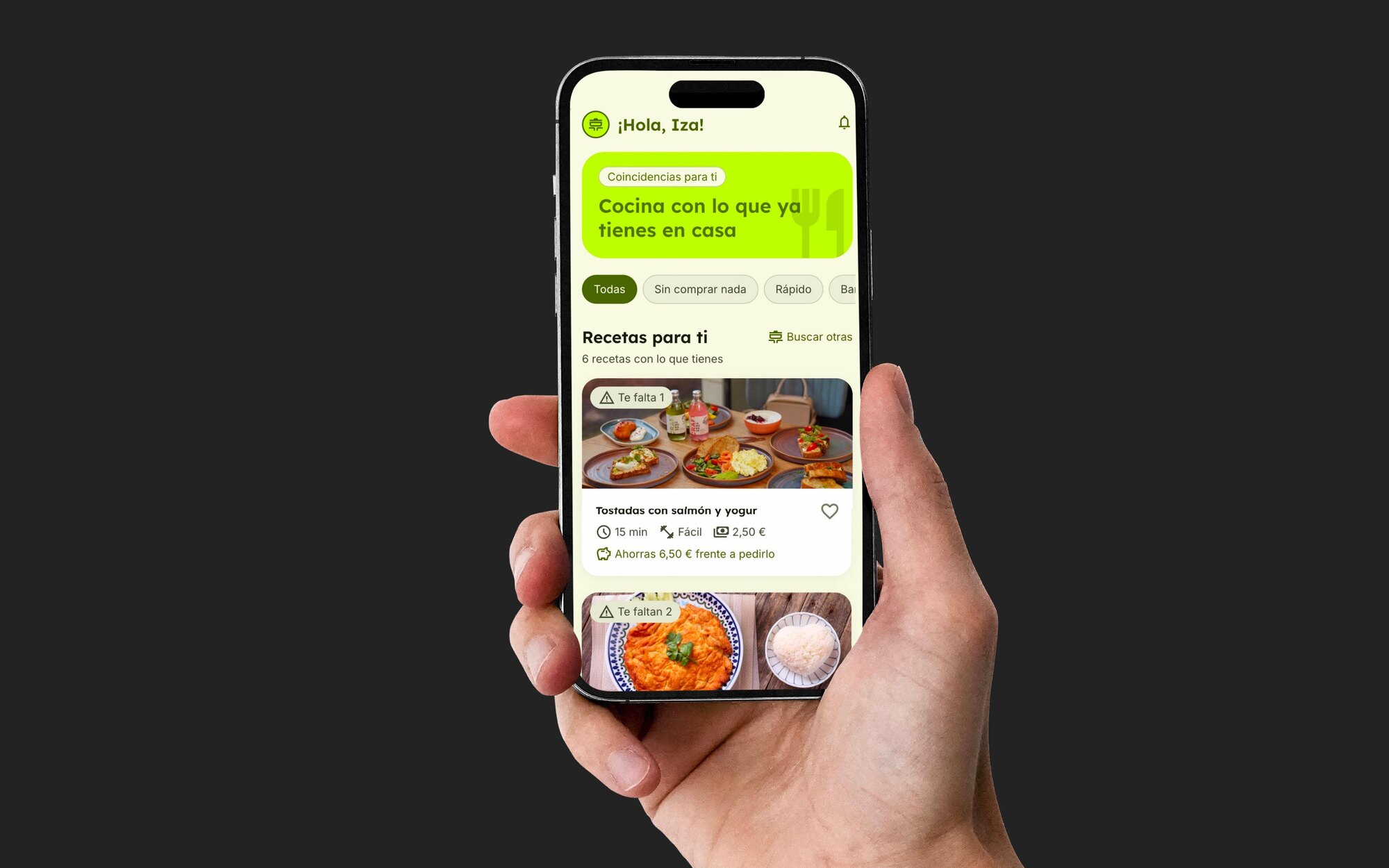
The short version. Ropavieja is a pantry app for young people in Spain who think cooking like at home is expensive and slow. You photograph your receipt, AI OCR fills the pantry, and it suggests home-style Spanish recipes with what you already have before it expires. Built and deployed as a full-stack PWA, with the honest cost message on every recipe (1.50 euros at home versus 8 ordered in). It has not been tested with real users yet.
The problem
Young people in Spain think their only options are cheap but junk (ultra-processed food, delivery) or good but expensive and hard (“real” cooking). It’s a false choice: everyday home cooking is the cheapest, the healthiest, and it’s doable. But the vicious circle is real: you don’t know what’s in your fridge → you don’t know what to cook → you improvise or order in → you over-buy and throw out what expired.
The data backs it up (Spain):
- 25-34 year-olds waste the most food (11.7% frequently).
- 70% waste food because they forget what’s in the fridge.
- 22.1% throw food away because they don’t know leftover recipes.
- 44% of young people learn to cook on social media.
Research
I researched food waste among young people and the gap in the market. Existing apps (SuperCook, KitchenPal, Cooklist) are utilitarian and generic: they solve “what do I cook with X”, but with no soul, no localization, and without closing the loop. Too Good To Go and Phenix rescue surplus from shops: a different model.
The insight that steered the product: no one joins the full loop (what I have → what I cook → what I’m missing) with a Spanish, emotional identity (eating like at home) and an honest cost message (home-cooked vs ordering in).
Positioning
Eat like home without depending on anyone. Cheaper than ordering, with what you already have.
For students and young people who’ve left home, miss eating “like at home” but think cooking that way is expensive, slow and complicated. Three messages:
- Home flavour, realistic version. Classic Spanish dishes adapted to your life: few ingredients, one pot, and enough for leftovers.
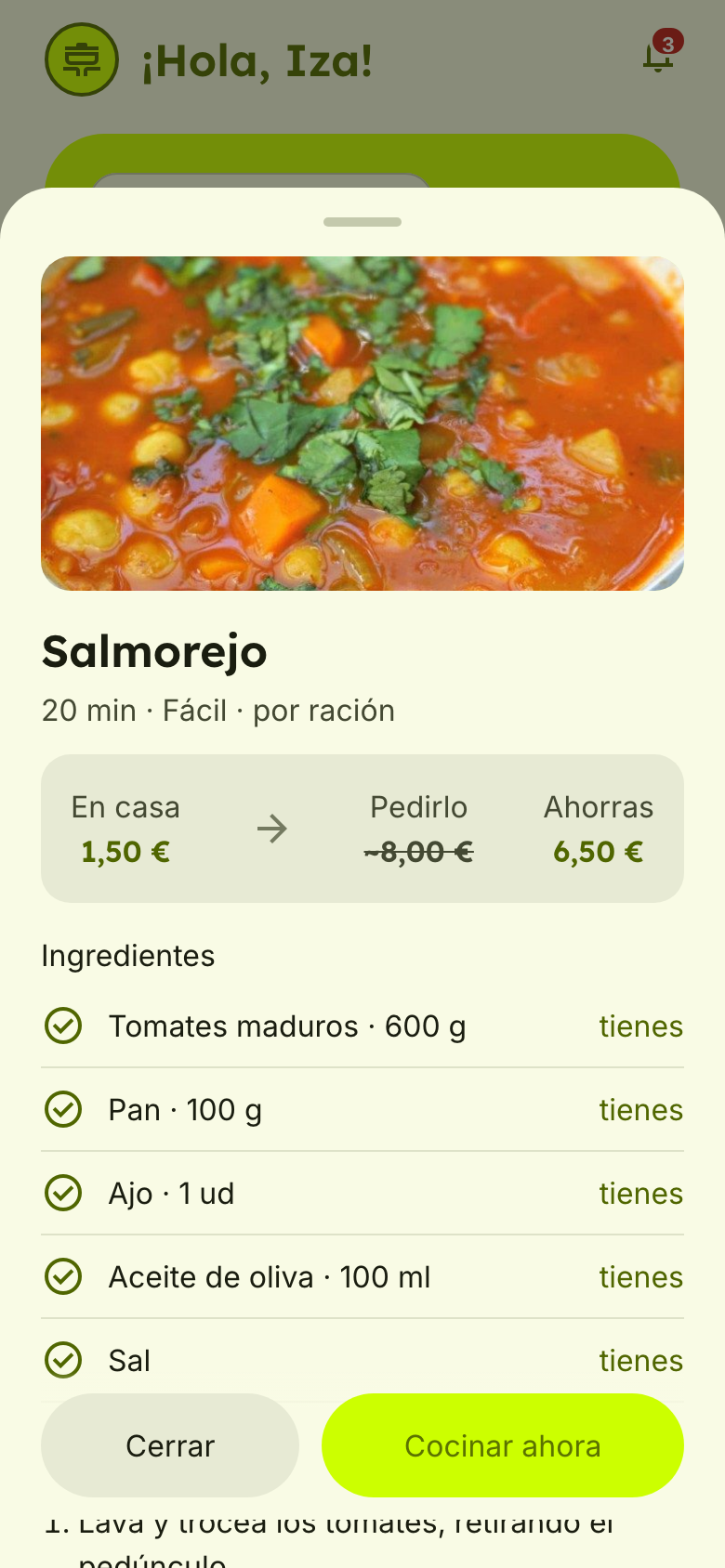
- Kills the “it’s expensive” myth. Every recipe compares what it costs to cook at home versus ordering it.
- Zero effort, zero waste. Snap the receipt → the app knows what you have → it tells you what to cook before it expires.
Design decisions
- Frictionless capture. 90% of these apps die from the friction of entering the pantry by hand. I solved it with an AI receipt scanner (OCR): snap the receipt → products with quantity, location and estimated expiry, editable before saving.
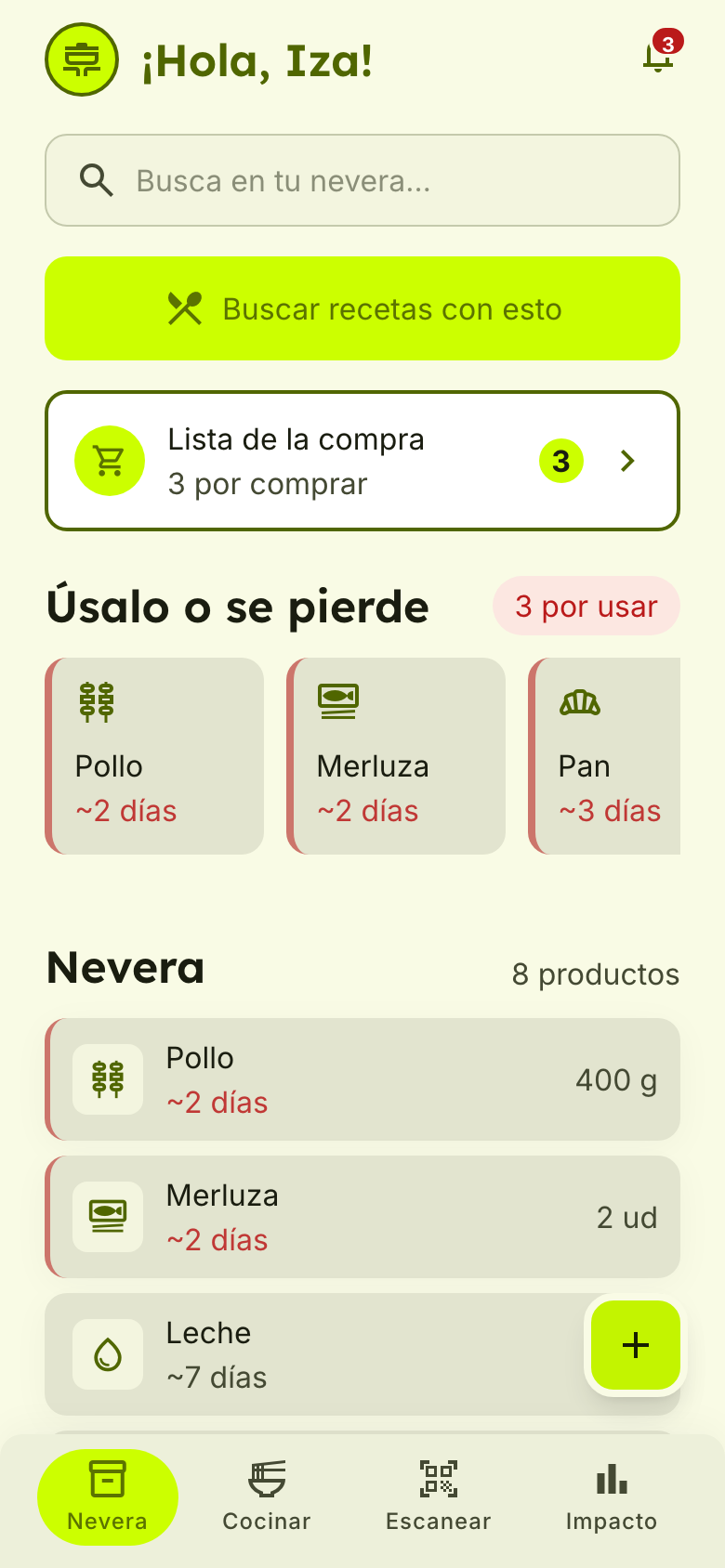
- Pantry by zone (fridge / pantry / freezer) with a freshness bar and “use it or lose it” alerts.
- AI recipes, home-style Spanish, with per-ingredient amounts, based on what you have and your preferences (veggie, vegan, gluten-free, budget, servings).
- Cooking = deducting. When you cook, the app subtracts what you used from your pantry, keeping the inventory alive with no effort.
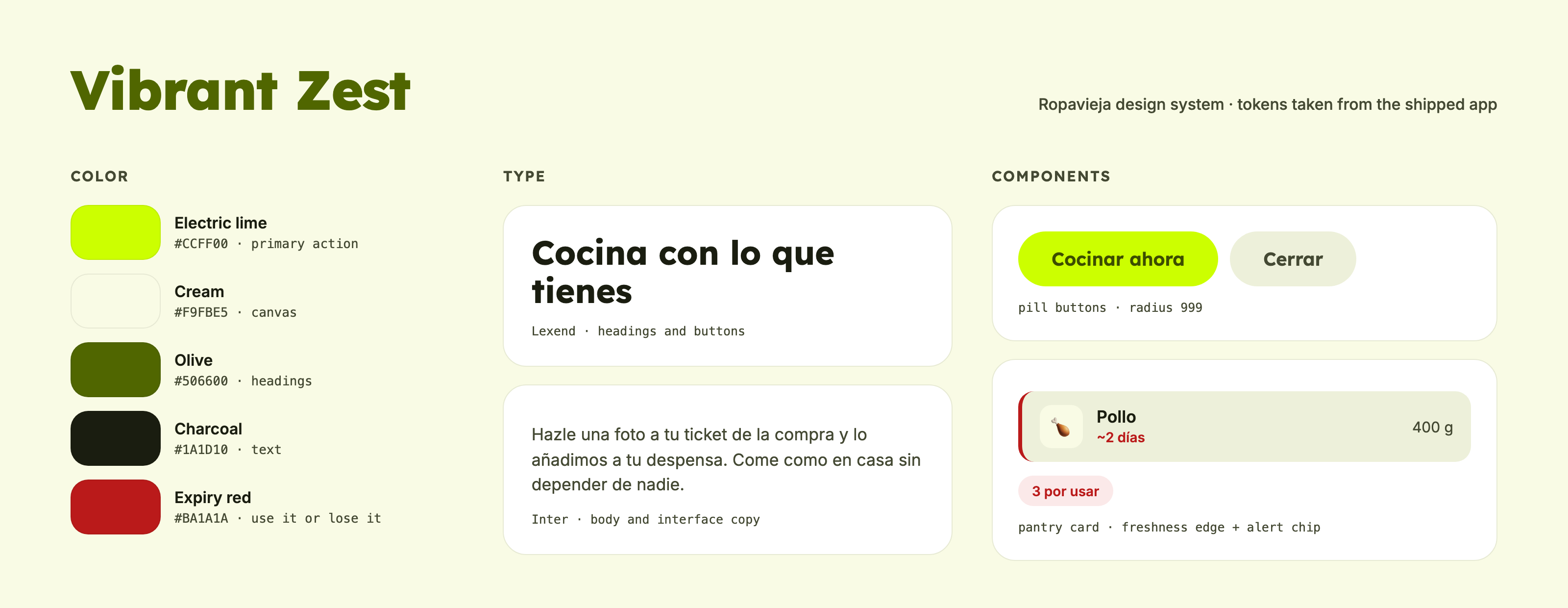
- “Vibrant Zest” identity. Electric lime, cream and charcoal; Lexend + Inter; very rounded corners and pill buttons. Warm and complicit, never clinical or fitness-app cold.
- Mobile-first, installable PWA. The real use is the phone (snapping the receipt, a quick check), not the desktop.

What I built
It didn’t stop at a prototype: Ropavieja is a real, working full-stack app.
- Accounts (sign up / log in) and persisted data.
- Real AI receipt scanner (OCR) and a zoned pantry with expiry dates.
- AI recipe generation based on your pantry and diet.
- Cooking deducts quantities; a shopping list of only what’s missing, with estimated savings.
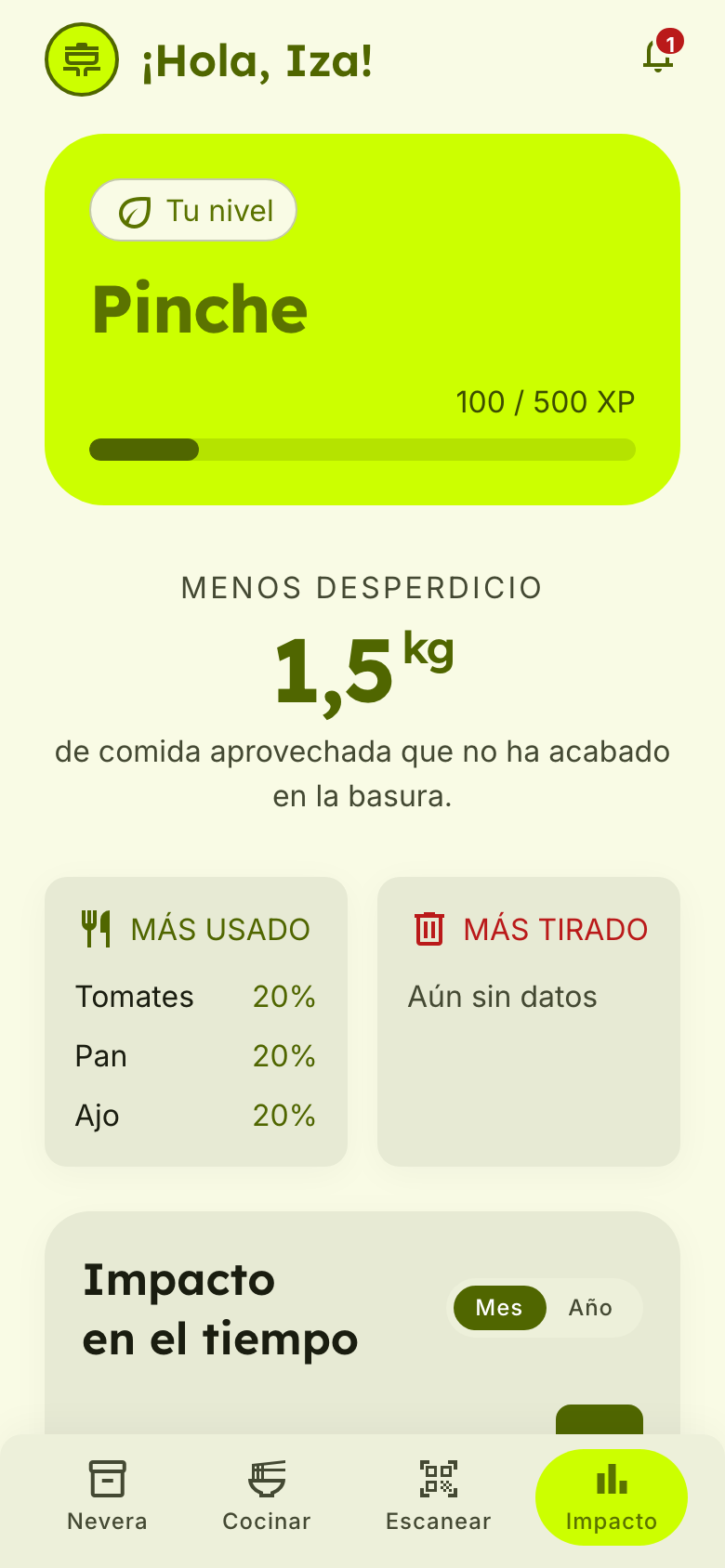
- Impact: gamification (XP / level), kilos kept from waste.
- Installable PWA on your phone.
What I’d test next
The whole product rests on one bet I have not checked with anyone: that photographing a receipt is easy enough to beat the friction that kills these apps. Here is the test I would run.
- 5 to 8 people, 25 to 34, in their own kitchen. Hand them a real receipt from their last shop. Does the scanner survive a crumpled ticket, a supermarket own brand, a smudged line?
- The friction bet, measured. Time from opening the app to a filled pantry. If it takes longer than typing five items by hand, the core decision was wrong.
- Do the recipes taste like home? Blind test: mine against a generic recipe app. If people cannot tell which is which, the whole "eat like home" promise is decoration.
- The week two question. Anyone can scan once. I would check who still has a live pantry seven days later, because the inventory only stays true if cooking really deducts what you used.
What I learned
The hardest part wasn’t technical. It was making something as emotional as “eating like home” coexist with AI. They clash: one is warmth, memory and family; the other sounds cold and generic. If the recipes “sounded like AI,” the whole promise broke.
I learned that people today notice and reject anything that sounds like AI. So I decided the AI should disappear: the word appears on no screen, and instead of inventing recipes from scratch, the system leans on a base of real home-style Spanish dishes and the AI only adapts on top of it. Technology in service of the taste of home, not the other way around. Trust is earned by being subtle.
I also want to be honest about how I built it: I didn’t write the code by hand line by line, I did vibe coding, directing the AI to stand up a real, deployed full-stack app. My part was the research, the product decisions, the design and, above all, defending the focus when it was easy to add things. Designing with AI as a tool is a skill in itself, and I’d rather say so.
Defending that focus was the hardest call: mobile only, one promise (cook with what you already have), and cutting the rest. Next time I’d validate earlier with real users and check whether the receipt scanner truly removes the friction I think it does, instead of taking it for granted.